Case Studies
Otukou Marae Roof Replacement
Client
Knight Building
Date of Completion
5th May 2025
Location
Otukou Road, National Park
Project Overview
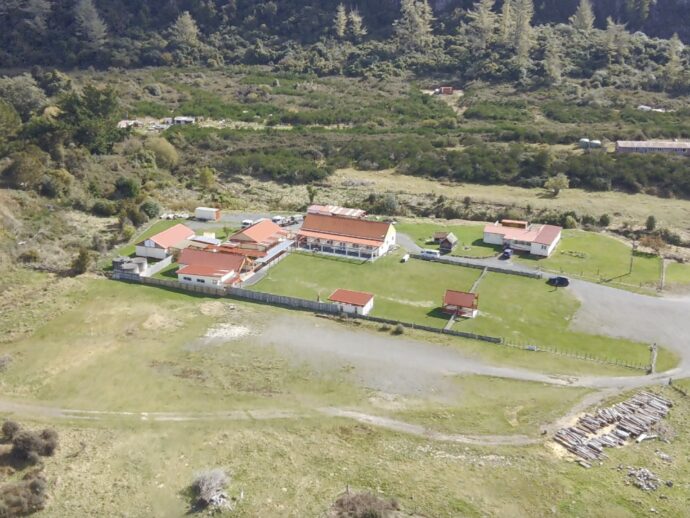
The Otukou Marae Roof Replacement project, located on Otukou Road, was a significant undertaking aimed at providing safe and functional access for critical roofing works.
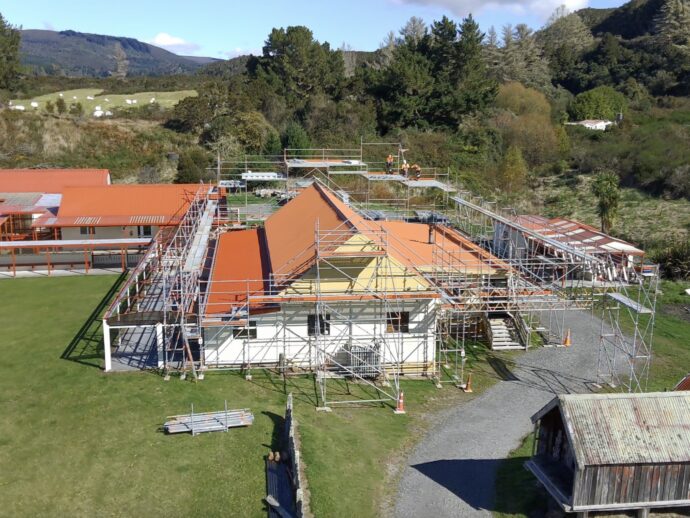
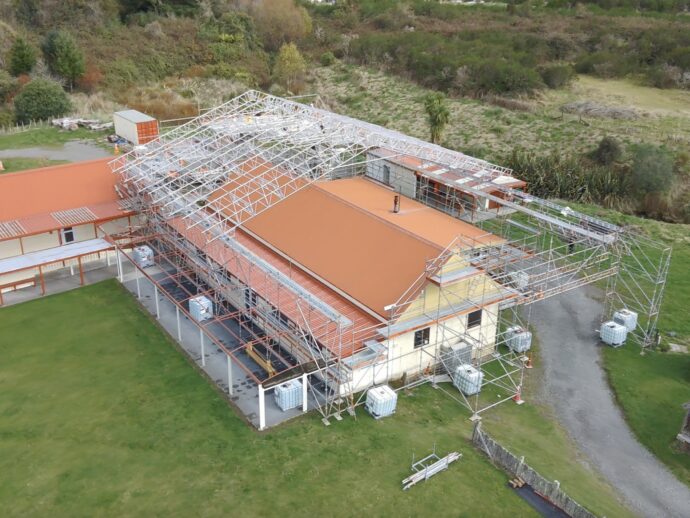
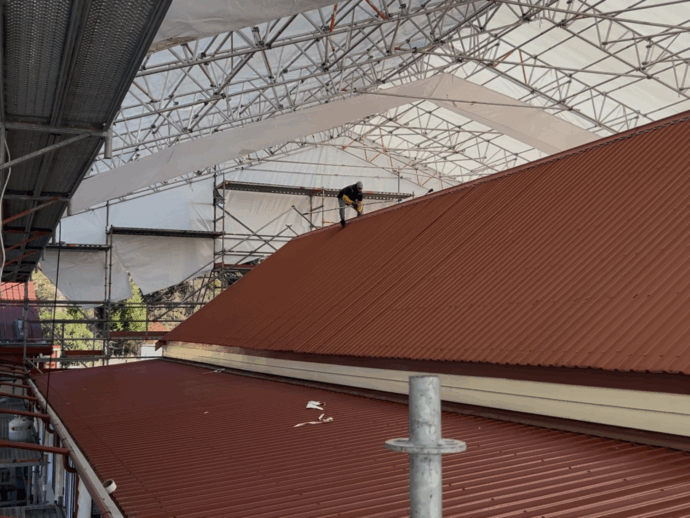
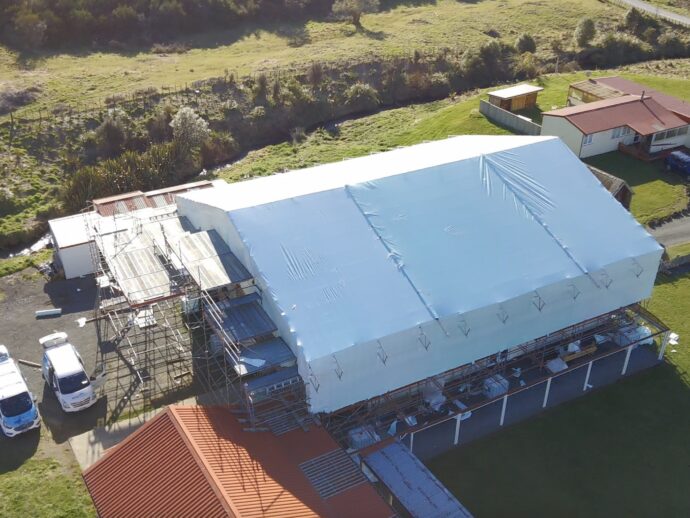
Euro Scaffolds was engaged by Knight Building to supply a full scaffolding solution that supported the replacement of the Marae’s roof. The project scope required the erection of comprehensive working perimeter platforms with edge protection, alongside a full roof encapsulation system, to create a safe and weather-protected environment for the builders.
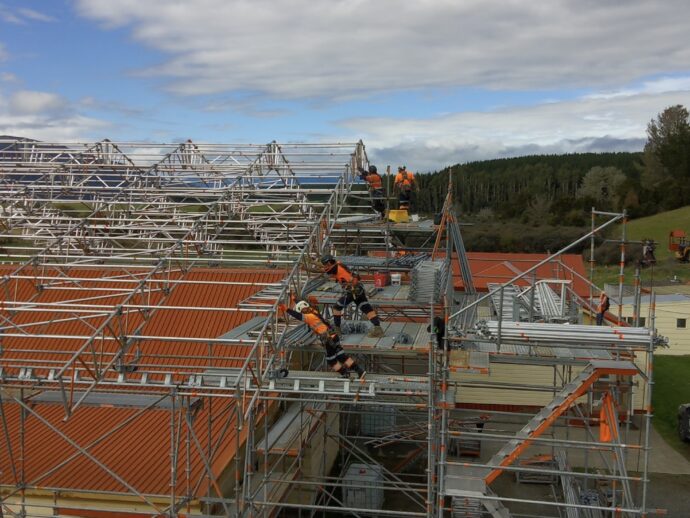
One of the key features of this build was the use of our rolling Keder Roof system, which enabled continuous protection from the elements while allowing roofers to operate underneath. In addition, bridges were installed to maintain site accessibility, ensuring smooth movement around the worksite without interrupting workflow. These elements combined to form a comprehensive system that enhanced both safety and efficiency on site.
Our work on this project directly supported Knight Building, the main trade on-site, and allowed their crew to complete roofing works with confidence, even under the pressures of working in a remote and weather-affected environment.
Challenges
One of the biggest challenges was getting the right gear as well as the right amount of gear down to site the first time. Given the working site was over an hour away, there was minimal room for error to eliminate lost time either going back to get the right gear or waiting for it to be delivered.
We had restricted access to a Hiab due to the location, so we were required to winch all gear up onto the loading bays for construction of roof system. The electric winch broke down on day 2 and given the remote location we had to resort to a man powered pully system which impacted overall efficiency. Also, given the pitch of the new roof differed to the old, specific calculations were required to realise the height of the loading bay. This required staff with experience and prior knowledge as well as pre-planning in the days leading up.
Weather conditions (wind, rain, cold) and site isolation posed significant constraints. Weather conditions varied significantly, with strong winds and cold temperatures impacting work schedules and safety protocols. Rainfall during the project created hazardous conditions, leading to delays and potential safety risks for the crew. The site’s isolation made it difficult to access resources and support, further complicating operations during adverse weather conditions. Short work weeks and public holidays further delayed project completion.
We had to create an access tunnel over the driveway so that access around the back of the Marae was maintained.
Solution
Special scaffolding configurations included a unique bridge over the driveway and stair access to the loading bay, improving safety and efficiency. The unique bridge design allowed for safe passage over the driveway, maintaining site access for vehicles and equipment. Stair access to the loading bay improved access and the ease of transporting materials. These special configurations enhanced overall workflow efficiency and minimized downtime during the project.
Results
Scaffolding systems offered robust weather protection, ensuring that builders and roofers could work safely in various weather conditions. The inclusion of stair access facilitated easier movement of materials and personnel, enhancing overall efficiency on site.
By providing a stable platform for roofing work, scaffolding minimized risks associated with falls and accidents, contributing to a safer work environment.
Team Insights
Teamwork and communication were strong; crew members naturally assumed roles based on experience, which improved workflow and minimized wasted time. Crew members were familiar with each other’s working styles, allowing for seamless collaboration and efficiency. Defined roles based on individual strengths and experiences led to a more organized workflow. Effective communication minimized confusion and ensured that tasks were completed in a timely manner.